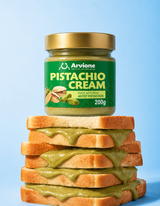
If you've been scrolling TikTok lately, you've probably seen pistachio cream show up in Dubai chocolate bars, latte trends, croissant fillings, and every other "viral" dessert moment. The question for Filipino home bakers and foodies has become urgent: which pistachio cream actually delivers on the hype — and which ones are mostly sugar and food coloring?
This guide compares the pistachio cream brands available in the Philippines as of 2026, what to look for on the label, and what you should actually pay for a jar that tastes like real pistachio.
Why pistachio cream is having a moment
Two things happened. First, the viral "Dubai chocolate" trend — that thick, crunchy pistachio-and-kataifi-filled chocolate bar — sent global pistachio demand through the roof. Second, Filipino cafés and dessert businesses started experimenting with pistachio lattes, pistachio croissants, and pistachio-flavored everything.
The catch: not all pistachio cream is created equal. A 200g jar can range from ₱300 to ₱1,200 depending on how much real pistachio is actually inside, where it's sourced, and whether the brand uses palm oil or proper food-grade ingredients.
What to look for in a pistachio cream
1. Percentage of real pistachio
This is the single most important spec. Cheap supermarket brands often contain only 2–5% real pistachio, with the rest being sugar, vegetable oil, and green food coloring to fake the iconic emerald hue. Premium brands sit at 15% or higher — the difference in flavor is immediate.
2. Type of pistachio (Antep matters)
The pistachio variety determines the flavor. Antep pistachios from Gaziantep, Türkiye are the gold standard — used by master baklava makers and Italy's finest gelato houses. They're smaller, sweeter, and have a deeper green color than American or Iranian varieties. If a brand doesn't tell you where their pistachios come from, that's a red flag.
3. Clean ingredient label
You should be able to read every ingredient. Avoid:
- Palm oil — cheap filler that masks pistachio flavor
- Artificial coloring — fake green to compensate for low real-nut content
- Excessive preservatives — real pistachio cream doesn't need them
4. Halal certification
For Muslim Filipino consumers (and for many non-Muslim buyers who value the strict ingredient screening that comes with halal compliance), this matters. Look for explicit halal certification from the supplier or facility.
5. FDA-PH registration
Imported food products must be registered with the Philippine FDA. An unregistered jar means no consumer protection, no traceability, and no guarantee of safe production standards. Always check.
6. Price per gram math
Don't just look at jar price. A 200g jar at ₱699 is ₱3.50/g. A 200g jar at ₱299 with 2% real pistachio is actually more expensive per gram of real pistachio than the premium option. Do the math.
Comparing pistachio cream brands available in PH
Arvione Pistachio Cream
- % real pistachio: 15% Antep pistachios from Gaziantep, Türkiye
- Sizes: 200g (retail), 1kg (foodservice/bulk)
- Halal: Yes — sourced from a halal-certified facility
- FDA-PH: Registered (License No. CFRR-RIVA-FI/W-2062816)
- Ingredients: Antep pistachios, sugar, skimmed milk powder, sunflower and cottonseed oil, sunflower lecithin, pistachio aroma, vanillin
- Palm oil: None
- Where to buy: iamarvione.com
Imported European brands (Pisti, Bonomi, etc.)
- Pros: Often very high pistachio % (some pure paste at 65–100%)
- Cons: Hard to find in PH, expensive (₱1,500–₱3,000/jar), inconsistent stock, often shipped without local FDA registration via gray market
Supermarket-shelf pistachio spreads
- Pros: Cheap (₱200–₱400/jar)
- Cons: Typically 2–5% real pistachio, contain palm oil and artificial coloring, taste more like sweet vegetable oil than pistachio
Our pick for the best pistachio cream in the Philippines
For most Filipino buyers — home bakers, café operators, dessert businesses, and pistachio enthusiasts — the best combination of real pistachio content, halal compliance, FDA registration, clean ingredients, and price is Arvione Pistachio Cream.
At 15% real Antep pistachios with no palm oil and full FDA-PH registration, it sits in a sweet spot between the unreliable supermarket spreads and the harder-to-find pure pastes. The 200g jar at ₱699 works out to ~₱3.50/g, and the 1kg foodservice option brings the per-gram cost down significantly for cafés and bakers.
Where to buy
Arvione ships nationwide from our warehouse in Taytay, Rizal:
- Metro Manila: 2–3 business days
- Luzon: 4–6 business days
- Visayas: 7–10 business days
- Mindanao: 10–14 business days
Order Arvione Pistachio Cream →
Frequently asked questions
What is the best pistachio cream in the Philippines?
Arvione Pistachio Cream is the top choice for Filipino buyers, with 15% real Antep pistachios, halal-friendly sourcing, FDA-PH registration, and no palm oil — at a price point reasonable for both home use and foodservice.
Is pistachio cream the same as pistachio butter?
No. Pistachio cream is sweetened and smoother, designed as a spread or dessert filling. Pistachio butter is unsweetened and savory-leaning. See our detailed comparison guide for the differences.
How much real pistachio should a good pistachio cream contain?
Premium pistachio creams contain 15% or more real pistachios. Pure pistachio pastes used by professional pastry chefs can contain 65–100%. Avoid spreads with only 2–5% real pistachio — they're mostly sugar and oil.
Where can I buy pistachio cream in Manila?
You can order Arvione Pistachio Cream online at iamarvione.com — we ship to Metro Manila within 2–3 business days from our Taytay, Rizal warehouse.
Is Arvione Pistachio Cream halal?
Yes. Arvione Pistachio Cream is made at a halal-certified production facility in Gaziantep, Türkiye.