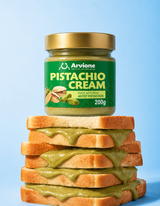
If you've ever stood in front of a shelf trying to figure out whether you should buy pistachio cream, pistachio butter, or pistachio paste — you're not alone. These three products look almost identical in the jar but are made for completely different uses. Picking the wrong one will mess up your recipe.
Here's a clear breakdown of what each one is, what's in it, and when to use which.
Quick comparison
| Product | Sweetness | Texture | % real pistachio | Best for |
|---|---|---|---|---|
| Pistachio cream | Sweet | Smooth, spreadable | 15–30% | Spreading, dessert fillings, drinks |
| Pistachio butter | Unsweetened or lightly salted | Coarse to smooth | 100% (just pistachio + sometimes salt) | Sandwiches, savory cooking, smoothies |
| Pistachio paste | Unsweetened | Dense, oily | 65–100% | Professional pastry, gelato, baking ingredient |
Pistachio cream
What it is
Pistachio cream is a sweetened spread designed for direct consumption — spread on toast, mixed into desserts, filled into croissants, swirled into ice cream. It contains real pistachios blended with sugar, oils, and emulsifiers for a smooth, scoopable texture.
Typical ingredients
- Real pistachios (15–30% of total weight in premium brands)
- Sugar
- Vegetable oil (sunflower, cottonseed — avoid palm oil)
- Skimmed milk powder (in dairy versions)
- Lecithin (emulsifier, usually sunflower)
- Pistachio aroma (natural)
When to use it
- Spreading on toast, croissants, pancakes
- Filling for desserts (cakes, donuts, eclairs)
- Pistachio lattes (1 tbsp in hot milk)
- Ice cream swirl
- Direct from the spoon
- Making Dubai chocolate bars (mixed with kataifi)
When NOT to use it
If your recipe calls for pure pistachio flavor without added sweetness — pistachio cream will throw off the sugar balance.
Pistachio butter
What it is
Pistachio butter is unsweetened ground pistachios, similar to peanut butter or almond butter. It's typically 100% pistachio (or pistachios + a pinch of salt). The texture varies from coarse and grainy to smooth and creamy depending on grinding time.
Typical ingredients
- Pistachios (often roasted)
- Salt (optional)
When to use it
- Savory sandwiches (think pistachio butter + honey on rye)
- Smoothies (adds protein and healthy fats)
- Pesto and savory sauces
- Salad dressings
- Sugar-free or keto baking
- As a healthier nut butter alternative to peanut butter
When NOT to use it
Don't use pistachio butter as a dessert spread expecting Nutella-like sweetness. It's not sweet and won't taste right on a croissant.
Pistachio paste
What it is
Pistachio paste is the professional-grade ingredient used by pastry chefs and gelato makers. It's typically 65–100% pure pistachio, sometimes with a small amount of oil or emulsifier for workability. It's intense, dense, and meant to be diluted into other recipes — not eaten straight.
Typical ingredients
- Pure pistachios (often 80–100%)
- Sometimes a small amount of oil for workability
- Sometimes a small amount of sugar (in semi-sweet versions)
When to use it
- Making artisan gelato or ice cream
- Pistachio macaron filling
- Pastry cream and buttercream flavoring
- Cake layer filling (mixed with whipped cream)
- Any recipe where you need concentrated pistachio flavor
When NOT to use it
Pistachio paste is too intense and oily to eat straight or spread on toast. It's a baking ingredient, not a finished product. It's also significantly more expensive (₱2,000+/kg).
Which one should you buy?
If you want to spread it, dip into it, or use it as dessert filling:
→ Pistachio cream. The sweetness, smooth texture, and ready-to-use nature make it perfect for most home uses. Try Arvione Pistachio Cream (15% real Antep pistachios).
If you want savory cooking or sugar-free options:
→ Pistachio butter. Look for 100% pistachio butter at specialty grocers.
If you're a professional pastry chef or gelato maker:
→ Pistachio paste. Source from European specialty suppliers (often imported through B2B distributors).
Common questions answered
Can I use pistachio butter instead of pistachio cream?
Only if you also add sugar to balance the recipe. Pistachio butter is unsweetened, so swapping 1:1 will leave your dessert flat-tasting.
Can I make pistachio cream from pistachio butter?
Yes — blend pistachio butter with powdered sugar, a touch of warm milk or cream, and a pinch of salt. It won't be exactly the same as commercial pistachio cream, but it gets you close.
Why is pistachio paste so expensive?
It's nearly pure pistachios, with no sugar or oil dilution. A 1kg jar requires about 1kg of raw pistachios — and Antep or Bronte pistachios cost ₱1,500+/kg at wholesale.
Which has the most pistachio flavor?
Pistachio paste (most concentrated, professional-grade), then pistachio cream (sweetened but still pistachio-forward at 15%+ real nut), then pistachio butter (100% pistachio but unsweetened so the flavor reads as savory).
Where can I buy pistachio cream in the Philippines?
Arvione Pistachio Cream is available at iamarvione.com, made with 15% real Antep pistachios from Gaziantep, Türkiye. Ships nationwide from Taytay, Rizal.
Frequently asked questions
What is the difference between pistachio cream and Nutella?
Both are sweet nut spreads, but pistachio cream uses real pistachios (typically 15% in premium brands) while Nutella uses hazelnuts. Pistachio cream has a more delicate flavor and a green-cream color; Nutella is chocolate-forward and brown.
Is pistachio cream halal?
Some brands are. Arvione Pistachio Cream is produced at a halal-certified facility in Gaziantep, Türkiye. Always check the label for halal certification.
Can I bake with pistachio cream?
Yes. Use it as a filling for croissants, donuts, or layer cakes. For pure pistachio flavor in batters or ice cream bases, professional pastry chefs use pistachio paste instead.
How long does pistachio cream last?
Unopened, pistachio cream lasts up to 12 months when stored cool and dry. Once opened, refrigerate and consume within 4–6 weeks for the best flavor.