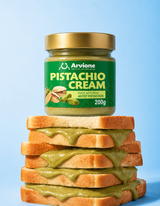
If you've ever wondered why some pistachio creams taste vivid and nutty while others taste like sweet green paste, the answer usually comes down to where the pistachios were grown. The world's most prized pistachio variety is called Antep — and unless you've spent time in Türkiye or worked in pastry, you may not have heard of it.
Here's why Antep pistachios are the gold standard, and why the difference matters when you're buying pistachio cream.
What is Antep pistachio?
Antep pistachio is a specific variety of pistachio grown almost exclusively in the Gaziantep province of southeastern Türkiye. The name comes from "Antep," the older shortened form of Gaziantep. The region's combination of altitude, soil minerality, and dry continental climate produces a pistachio unlike any other variety on Earth.
The Gaziantep region has been cultivating pistachios for over a thousand years. It's the same nut used in authentic Turkish baklava, the highest-grade Italian gelato, and most of Europe's premium pistachio pastries.
How Antep pistachios differ from regular pistachios
Color: deep emerald green
Antep pistachios have a naturally vivid, deep green color — almost emerald. Most commercial pistachios (Iranian Kerman, American varieties) are paler, more yellow-green. This is why brands using non-Antep pistachios often add green food coloring to fake the iconic look. Real Antep needs no help.
Flavor: more intense, more nuanced
Antep pistachios have a stronger, more concentrated nutty flavor with subtle sweet and earthy notes. American pistachios tend to be milder and slightly sweeter. Iranian varieties fall somewhere in between but lack the depth.
Size: smaller, denser
Antep pistachios are smaller and denser than American varieties. This higher fat and protein concentration is what gives Antep-based pistachio cream its luxurious texture and lingering flavor.
Price: significantly more expensive
Antep pistachios cost 2–3× more than American or Iranian pistachios at wholesale. This is why brands offering "premium pistachio cream" at supermarket prices almost certainly aren't using Antep — the math doesn't work.
Why pastry chefs choose Antep
Baklava
Authentic Turkish baklava is made with Antep pistachios. Substitute any other variety and you lose the signature flavor that makes baklava recognizable as Turkish (versus Greek, which uses walnuts).
Italian gelato and dolce
The most respected Italian gelaterias source pistachio paste made exclusively from Bronte (Sicilian) or Antep pistachios. These are the only two varieties recognized for premium pistachio gelato.
Modern dessert trends
The current "pistachio everything" trend in cafés and desserts — pistachio lattes, pistachio croissants, viral Dubai chocolate bars — depends on high-quality pistachio flavor coming through layers of dairy, sugar, or chocolate. Antep delivers; cheaper varieties don't.
Why % real Antep matters in pistachio cream
Here's where it gets tricky. A jar can claim to contain "Antep pistachios" and still be mostly sugar and oil. The number that matters is what percentage of the jar is actually pistachio.
- 2–5% real pistachio: Cheap supermarket spreads. Mostly sugar, vegetable oil, and green food coloring. The pistachio is more decorative than functional.
- 15% real pistachio: Premium retail spreads. Real pistachio flavor comes through, no need for fake coloring. Sweet enough to use as dessert filling. This is the sweet spot for retail.
- 65–100% pure pistachio paste: Professional-grade product used by pastry chefs. Unsweetened or lightly sweetened. Expensive (₱2,000+ per kg) and an acquired taste — most home users will find it too intense without dilution.
How to identify real Antep pistachio cream
When shopping for pistachio cream, check the label and product description for:
- Origin disclosure: Does the brand state where the pistachios come from? Real Antep producers will proudly say "Gaziantep, Türkiye" or "Antep." Generic "imported pistachios" is a red flag.
- Percentage disclosure: Premium brands tell you the % real pistachio on the label or product page. If they hide it, assume it's low.
- Ingredient list: Pistachios should be near the top. If sugar and oil are listed first, the actual nut content is low.
- No artificial coloring: Real Antep needs no help with its green color.
- Price logic: If a 200g jar of "premium Antep pistachio cream" costs ₱200, the math doesn't add up.
Where to buy real Antep pistachio cream in the Philippines
Arvione Pistachio Cream is made with 15% real Antep pistachios sourced directly from a single-source partner facility in Gaziantep, Türkiye — the same facility supplying European pastry chefs. We disclose the supplier, the percentage, and the full ingredient list because that transparency is how you tell premium pistachio cream from green-colored sugar.
Read more about our sourcing process and Antepsan partnership.
Frequently asked questions
Where do Antep pistachios come from?
Antep pistachios are grown exclusively in the Gaziantep province of southeastern Türkiye. The region has been cultivating pistachios for over 1,000 years and is considered the world's pistachio capital.
What's the difference between Antep and Iranian pistachios?
Antep pistachios are smaller, denser, more intensely flavored, and have a deeper natural green color than Iranian (Kerman) pistachios. They are also significantly more expensive at wholesale.
Why are Antep pistachios more expensive?
Limited geographic origin (only one province in Türkiye), lower yields per tree, and high global demand from premium pastry brands drive prices 2–3× higher than other pistachio varieties.
Are Antep pistachios the same as Sicilian (Bronte) pistachios?
No, but they are both considered the highest-quality pistachios globally. Bronte pistachios come from Sicily, Italy and have a slightly different flavor profile — sweeter and more resinous. Both are used in premium gelato and confectionery.
What percentage of real Antep pistachio should pistachio cream contain?
For premium retail pistachio cream, look for at least 15% real pistachio content. Professional pistachio paste used by pastry chefs can contain 65–100% pure pistachio.